When I look back at the thousands of photos I’ve taken over the last 20+ years I appreciate them more as memories, rather than pieces of art to be admired. I’ve sat at feeder stations in some great locations and taken some decent photos but in truth there’s not much of an interesting story to be told about sitting at a feeder! My favorite, although not always the most aesthetically pleasing, images have some sort of back story that makes them more interesting to me than the image itself. With that in mind, I wanted to highlight a handful of my most memorable photos and the story behind them
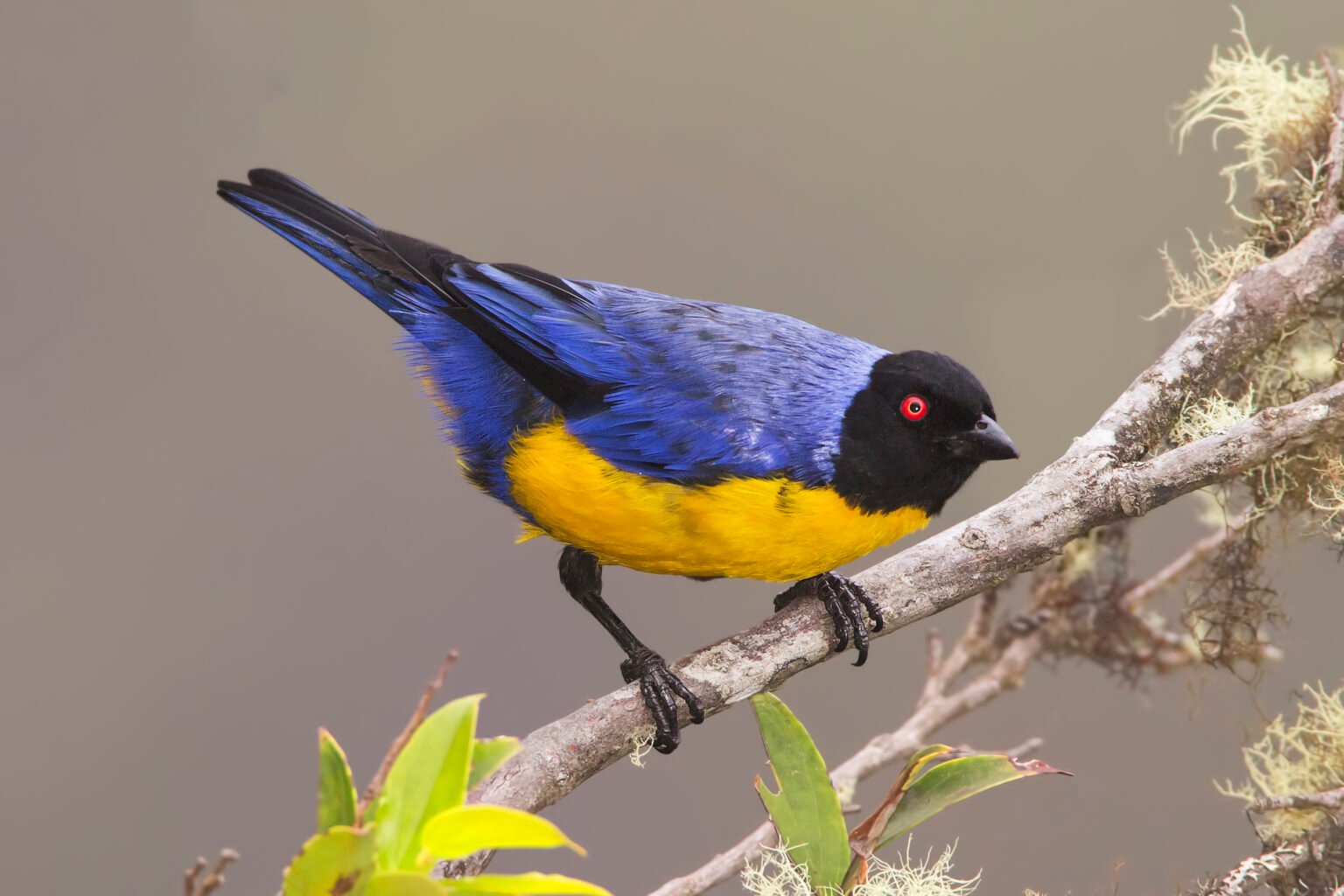
#1 Hooded mountain tanagers – Manu Rd, Peru, December 2013
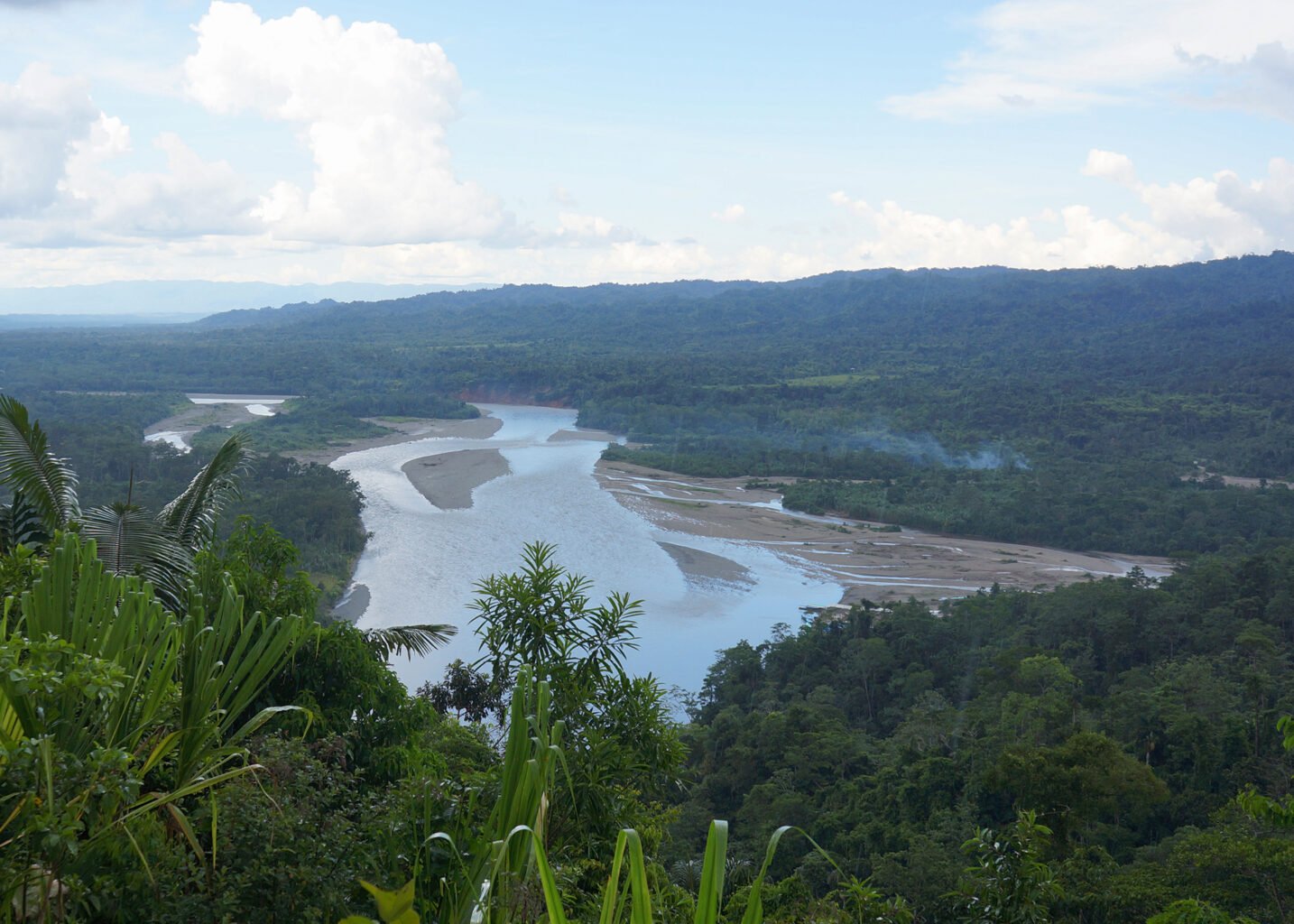
A few years earlier I had read an article in National Geographic about the Manu Biosphere in Peru, a place with unrivalled biodiversity, pristine forests and a primitive road that takes you from the paramo in the high Andes all the way down to the Peruvian Amazon. It seemed so exotic and magical! By that time, we had been well and truly bitten by the neotropical birding bug and had already been to Panama, Costa Rica, Brazil and Ecuador so it was time to add Peru to our list. After doing a bit of research I found a reputable guide online and over a few weeks we went back and forth organizing an itinerary that would take us from Cusco and Machu Picchu down the Manu Road, into the Peruvian Amazon and the Madre de Dios River.
Our guide Satu could not have been more enthusiastic about his country and the birds, and pretty much everything we wanted for our first trip there he could accommodate… that is, everything except the weather. We had pulled together a hardy group of 4 adventurers from Seattle (our friends Mike and Amy and my wife Jen and I), but the only time we could all get off work was at the beginning of December, otherwise we’d need to push it into the next year due to the onset of the rainy season. Once rainy season hits in the tropics it’s game over for birding and traveling, so it was a case of threading the needle and doing the trip a week or two before everything gets closed down by the rain. We had been planning this trip for a bit and were super excited about it so decided that we didn’t want to wait. We prayed to the rain gods and booked the trip.
On November 27th we all left Seattle and got to Lima late in the evening. After a short overnight stay in Miraflores we took the short flight to Cusco and as soon as we got off the plane, we could tell we were at altitude! Cusco is about 10,500 ft asl and after a day of getting acclimatized to the lack of oxygen and drinking copious amounts of coca tea we were ready for our big adventure. The plan was to Start in Cusco and drive over the next 5 days down the Manu Rd, staying at a couple of sites en route then taking a boat down the Madre de Dios River and spending 3-4 days in the Peruvian amazon. Satu had bad news for us… apparently the rainy season had started a bit early down there, and the only way we could make this trip happen was by doing it in reverse. Which meant a full day travel from Cusco to the end of Manu Road, start with the Amazon part of the trip, then work our way back and finish off with Machu Picchu at the end. Satu had to rethink the entire trip – everything had to change on the fly, and amazingly he had reorganized everything in less than a day. We were relieved that we could still do the trip, but it was going to be a bit of a hustle and we’d need a bit of luck along the way.
We set off and as we descended Manu Rd the road the weather started to change; a few clouds and showers turned into thick leaden clouds full of rain, and then into very heavy downpours. Rainy season had indeed started. The next days were very wet, and it was clear we had threaded the needle in terms of timing. The birding had been great despite the weather, but it was obvious we needed to leave ASAP as our location would soon be underwater. Thanks to Satu’s plan we had managed to sneak in for the last 4 days before it became impossible to stay down there.
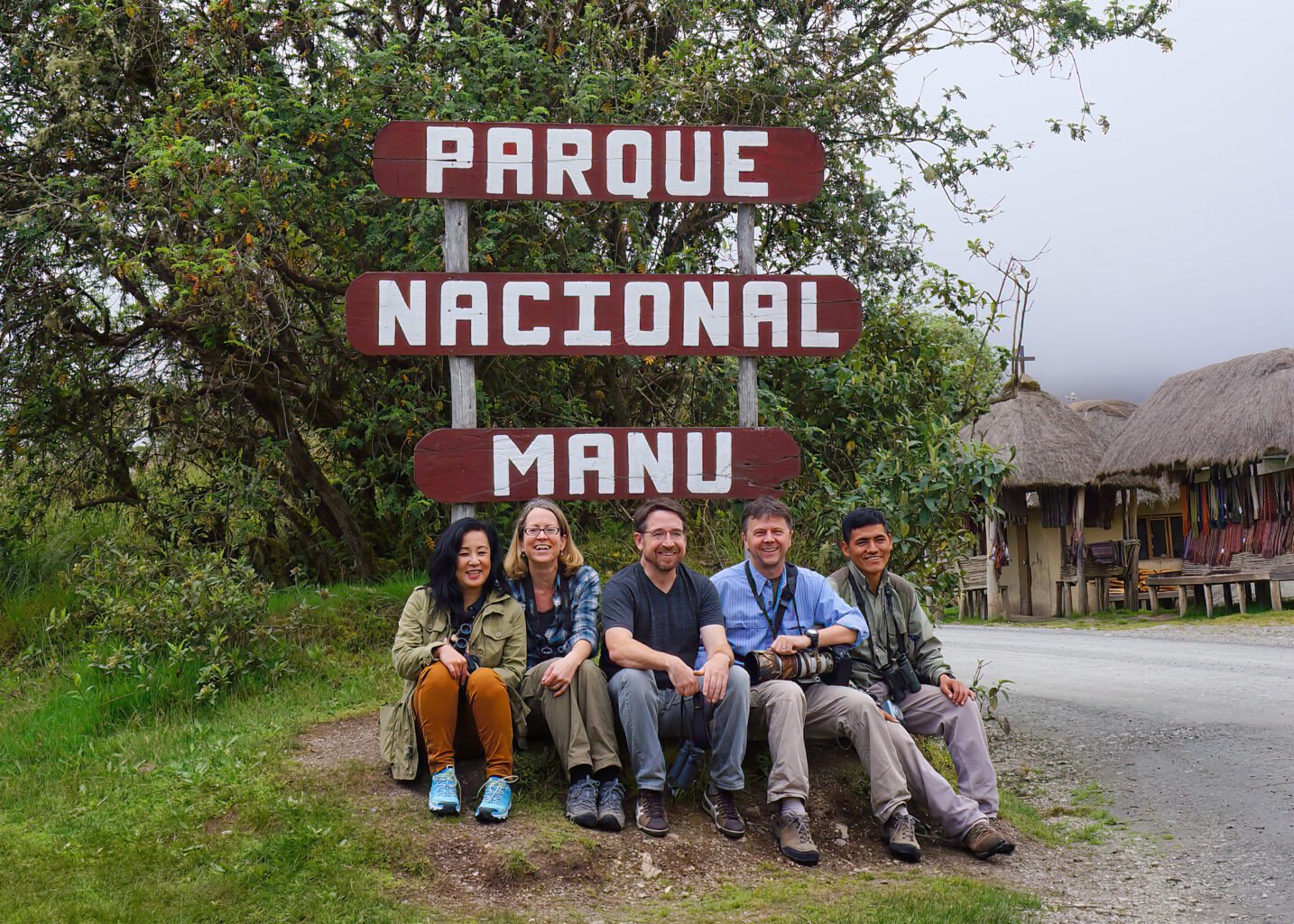
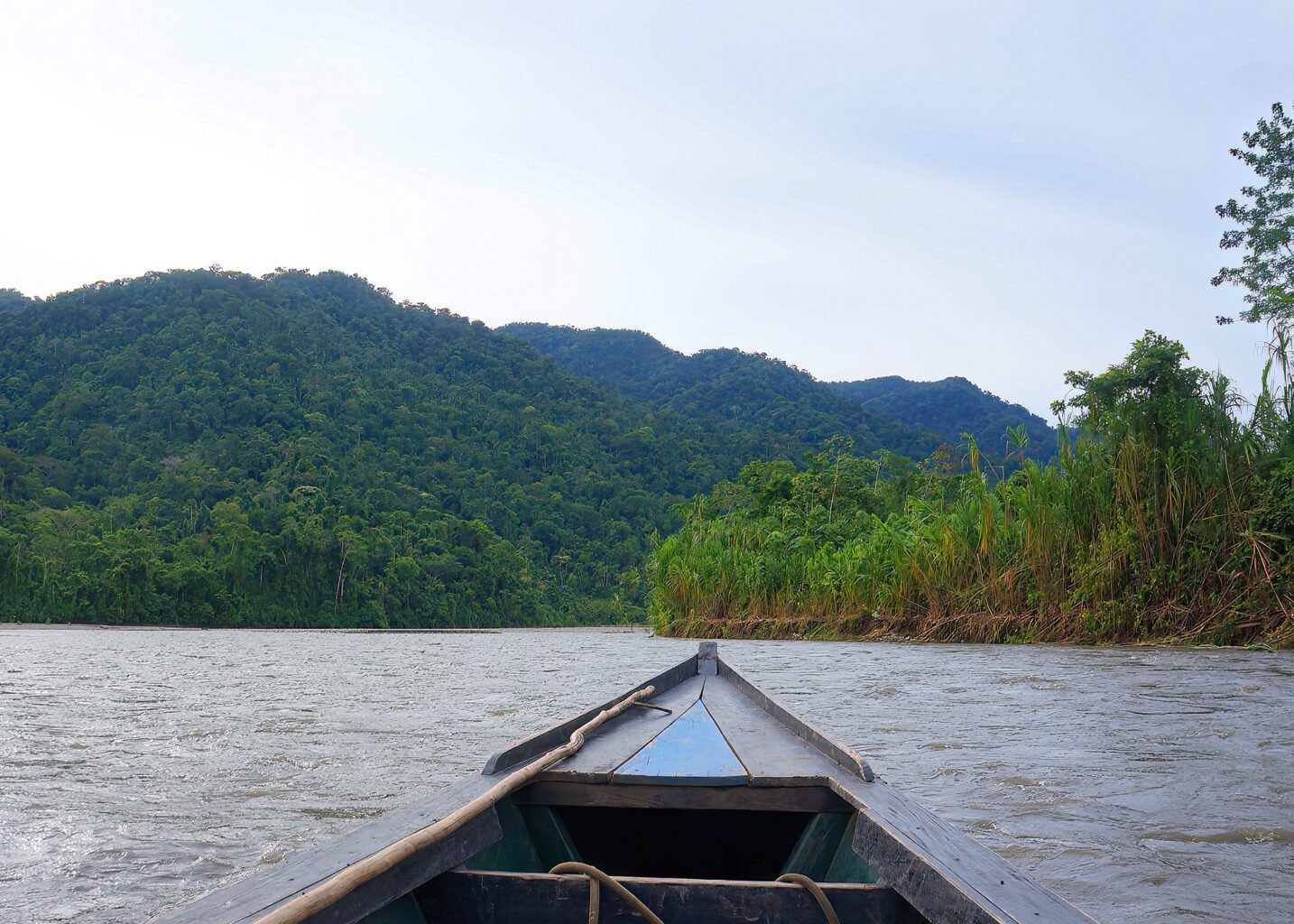
The grounds around our lodge were ankle deep in water when we left, and it was now time to shift gears and start dreaming about all of the cool birds we would see on our way up Manu Rd. I had a target list of birds we wanted to see, and one of the birds on that list was a hooded mountain-tanager. I had a poor view of one on a previous trip to Ecuador, but I really wanted a better look and thought it would be an awesome bird to get a photo of. On our way down we had missed out on everything since we could only stop for a few minutes at a time, but I was hopeful we’d do much better on the way up.
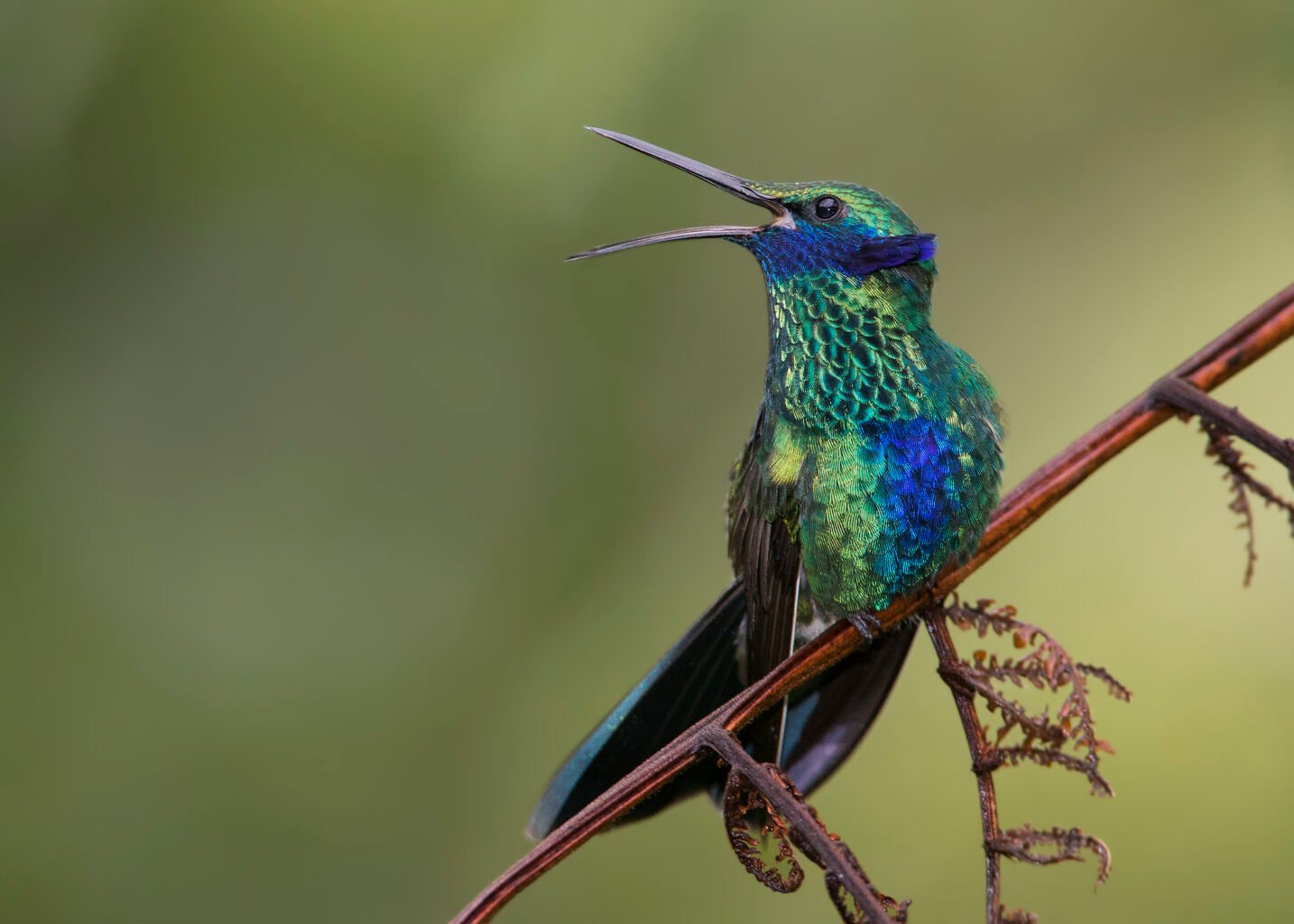
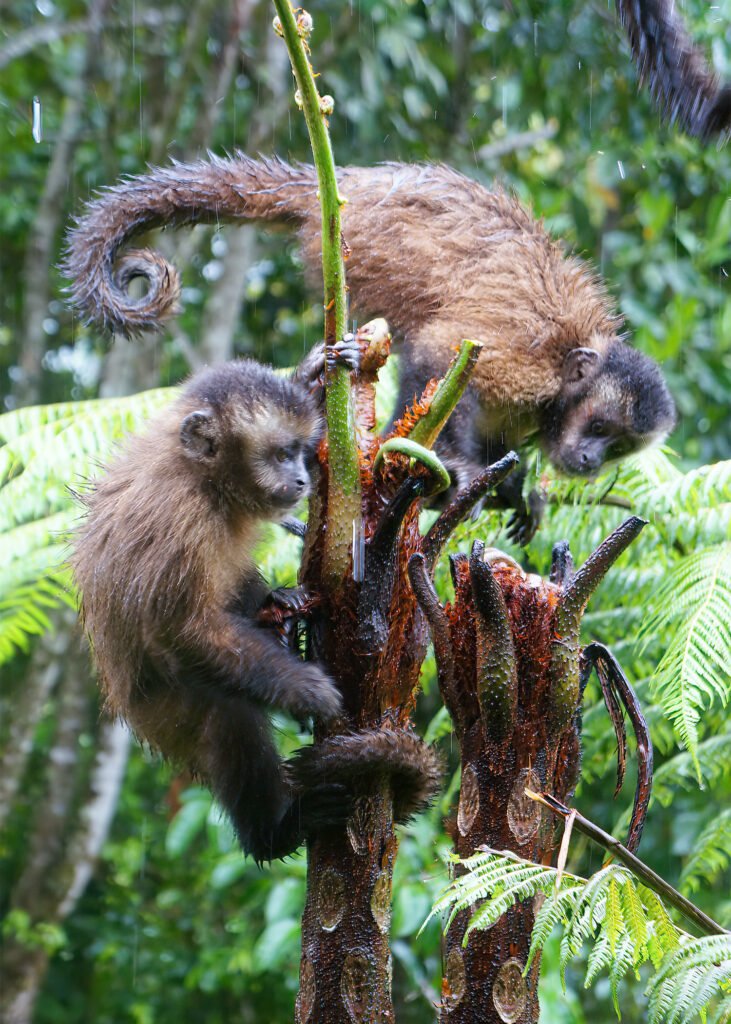
As we escaped the worst of the rain in the Amazon area, we noticed that it wasn’t getting much better as we went higher up Manu Rd. The rain was chasing us, and on our first day there was a minor landslide on the road. Luckily the local community were already on top of it and with the help of some heavy machinery made short work of clearing the road for us. After only an hour we were back on our way! The next couple of days were marked by short breaks of clear weather and torrential downpours, and as a result we were captive for a day at the Cock-of-the-Rock Lodge, which is not a bad thing at all. We took the chance to recharge the batteries, drink lots of coffee, get some pretty decent photos of the resident capuchin monkeys and also some of a very demonstrative sparkling violetear, one of which I got published in the Handbook of Bird Biology!
One of the problems with this weather though was that in addition to being very wet, it was also very warm, which meant that our bino’s and camera lenses were fogging up every time we went in and out of the van. Conditions were not optimal and while we didn’t regret our decision to visit so close to the rainy season, our resolve was definitely being tested.
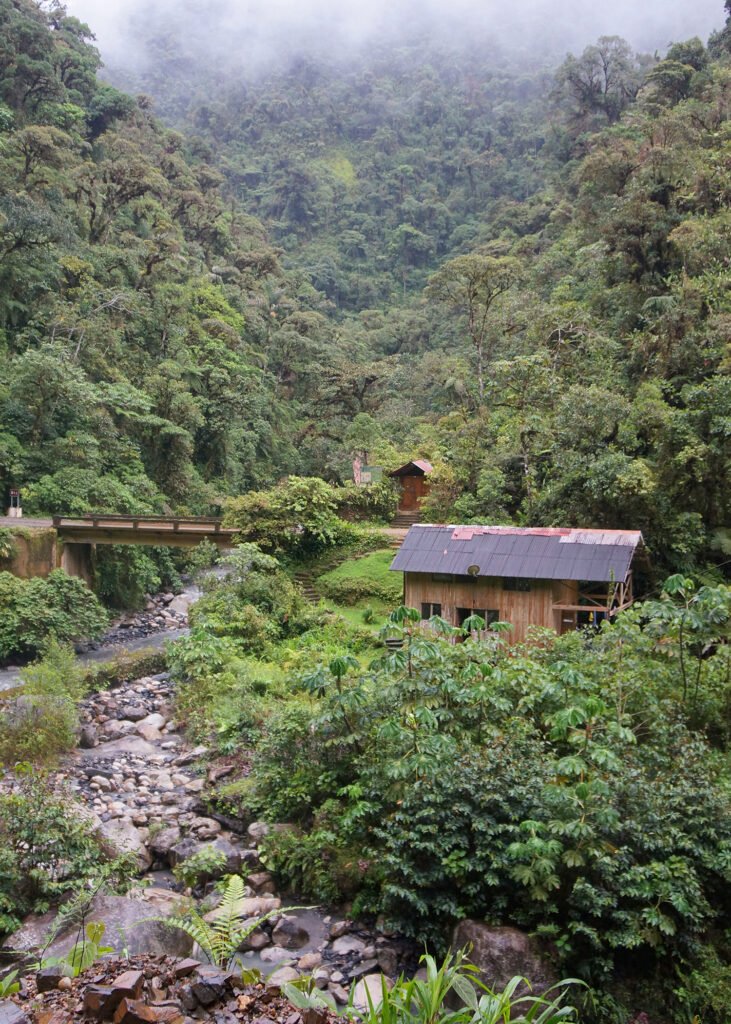
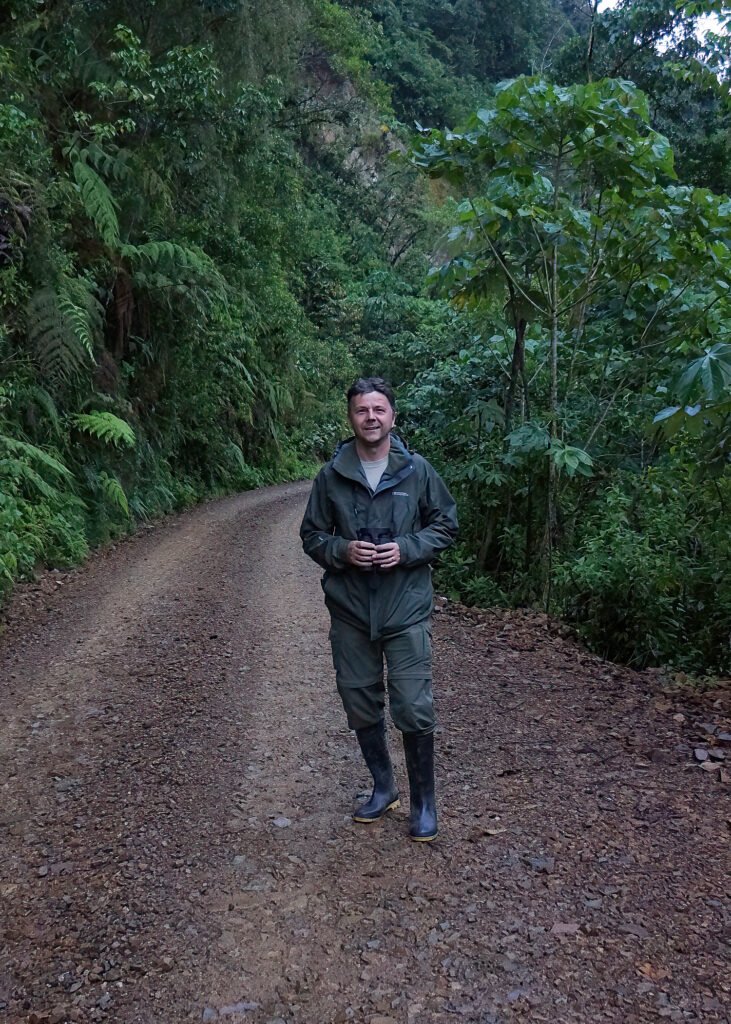
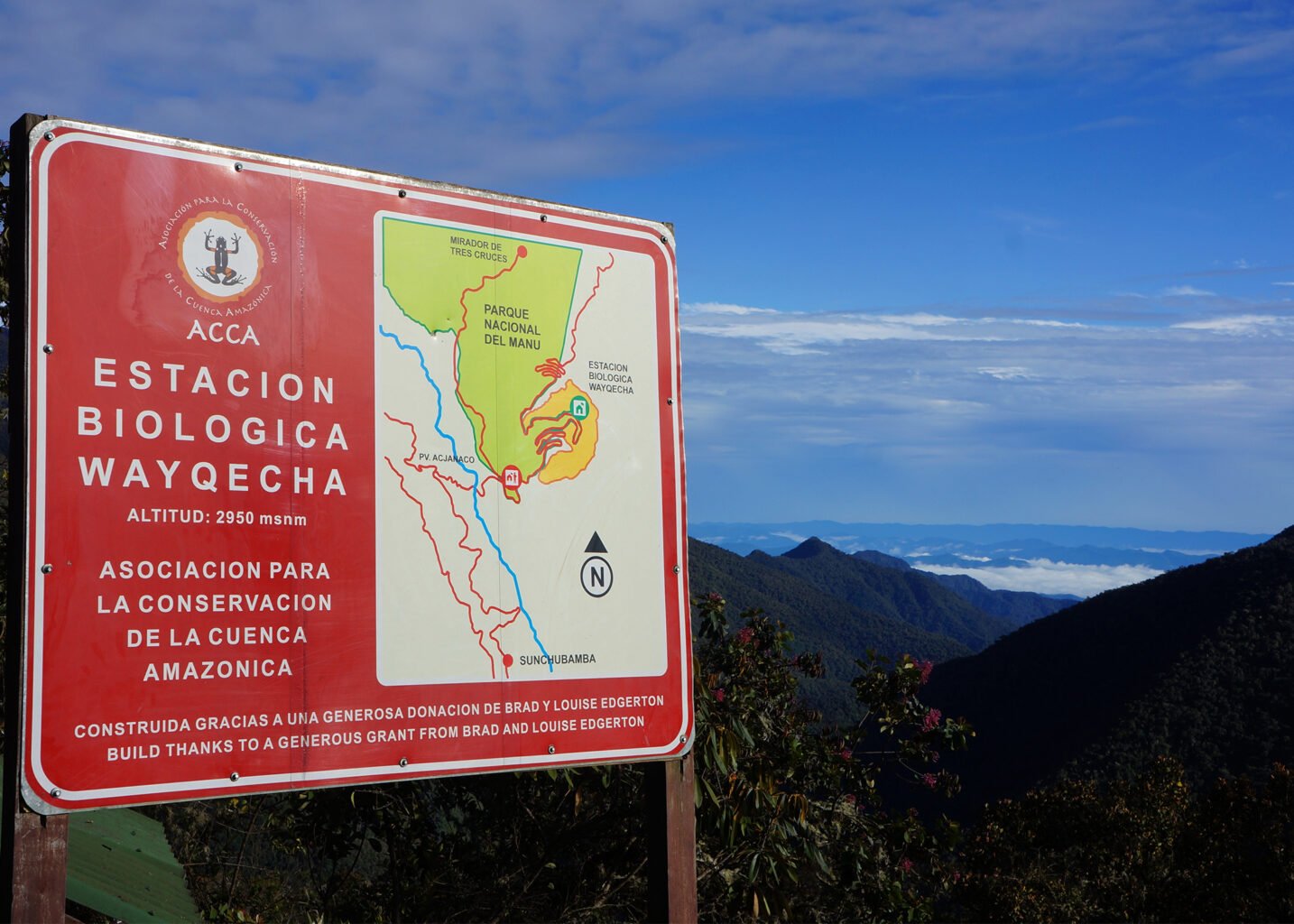
After a break in the rain, we set off to our last stop on Manu Rd – Wayqecha Biological Station. Wayqecha is the world’s highest biological field station at about 9500 feet asl, and there are some special birds at that altitude, so we were excited to get up there and hopefully away from the rain. After a couple of hours driving, we came upon a handful of vehicles that had stopped and saw that everyone was out of their vehicles looking at something ahead. We stopped the van and went out to check what was going on and it was like a scene out of a movie.
The entire road had been swept off the mountain side, and this wasn’t a small landslide like the one we had a couple of days ago, this one was enormous! The road was completely gone, just slid off the mountain, and we were on the opposite side of it a few miles from Wayqecha! It was obvious that our van was going nowhere soon, and it was our only transport for the rest of the trip. This road would take a long time to fix, so it would be at least a couple of days before we could get the van and it was getting late in the afternoon. Our next stop was a few miles up the mountain, how on earth were we going to make this work? By the time we had reached the landslide, local people had appeared (from where, I have no idea) and there were already some rescue activities going on.
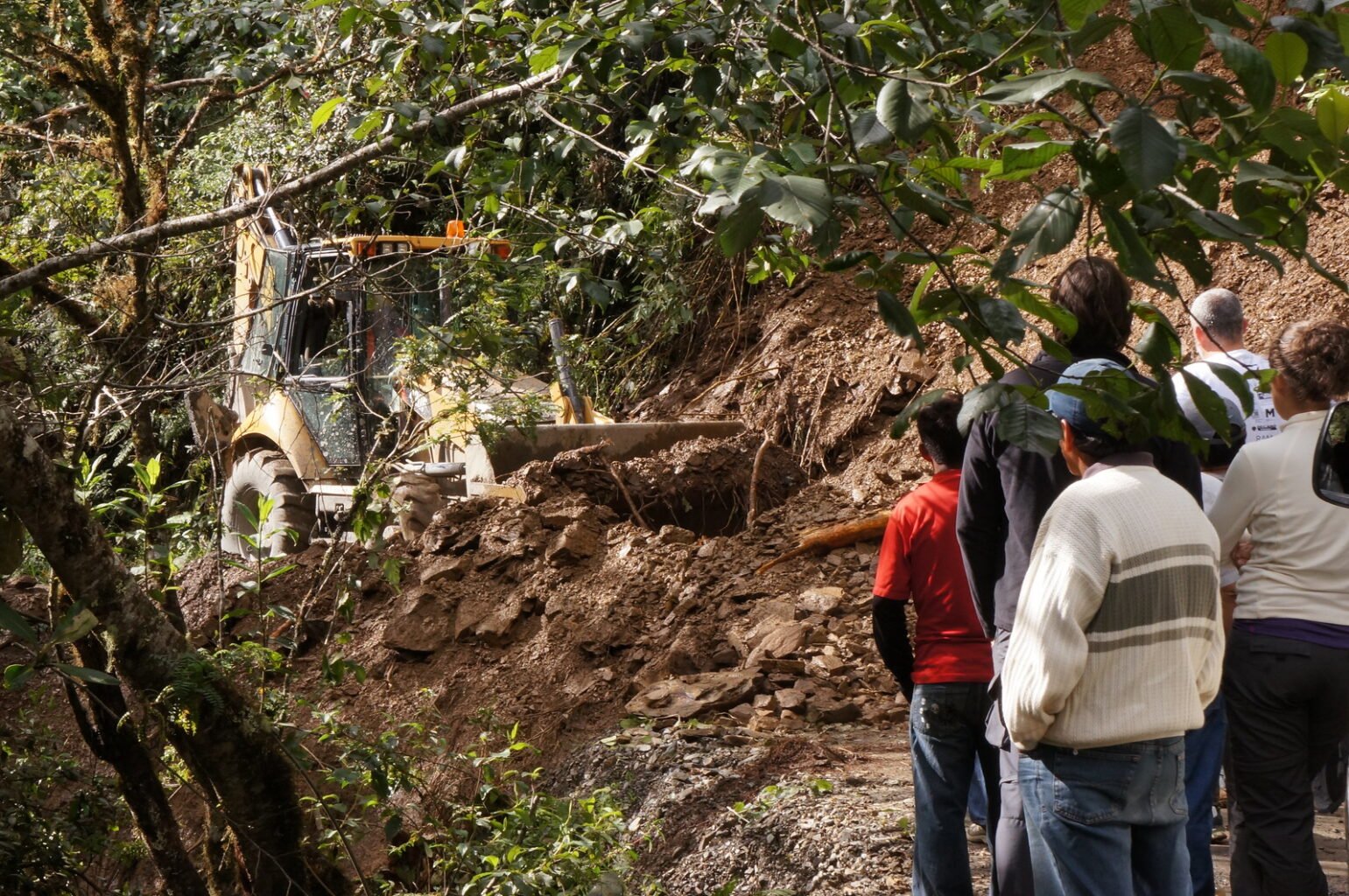
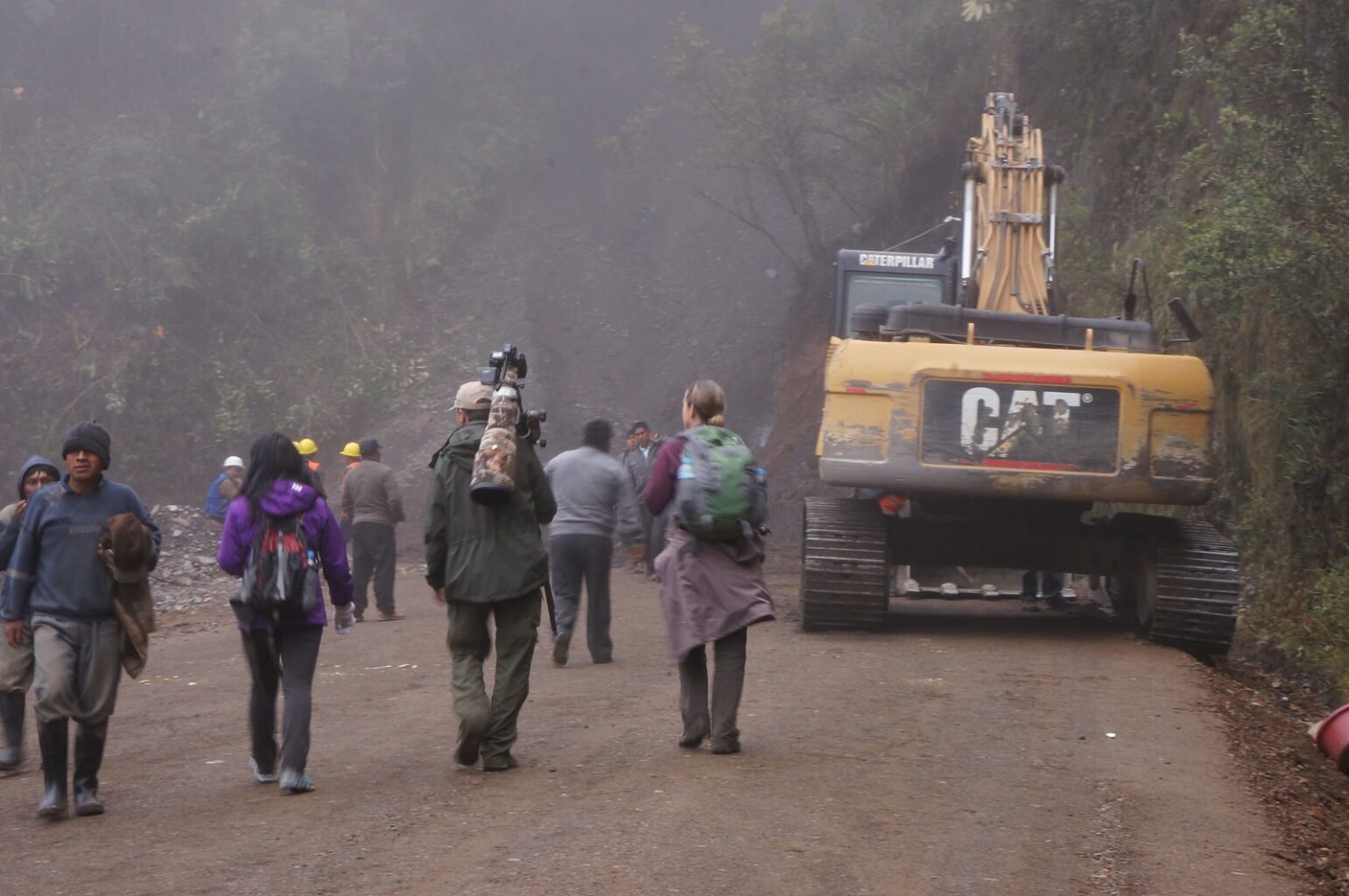
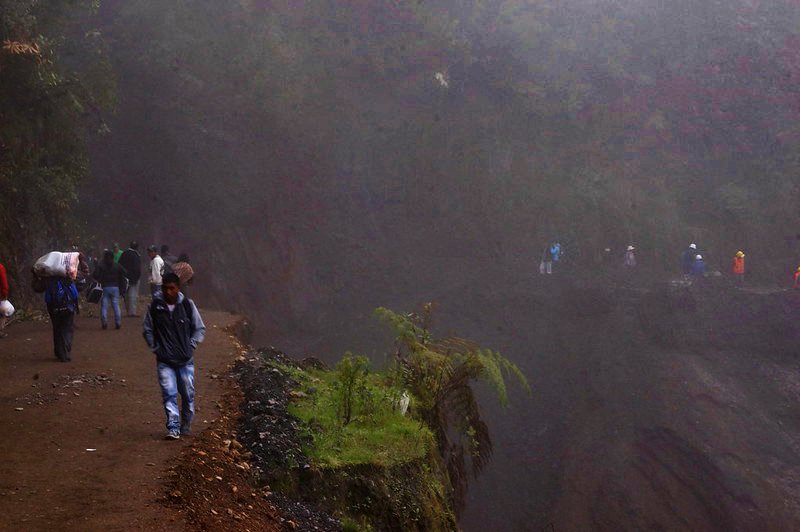
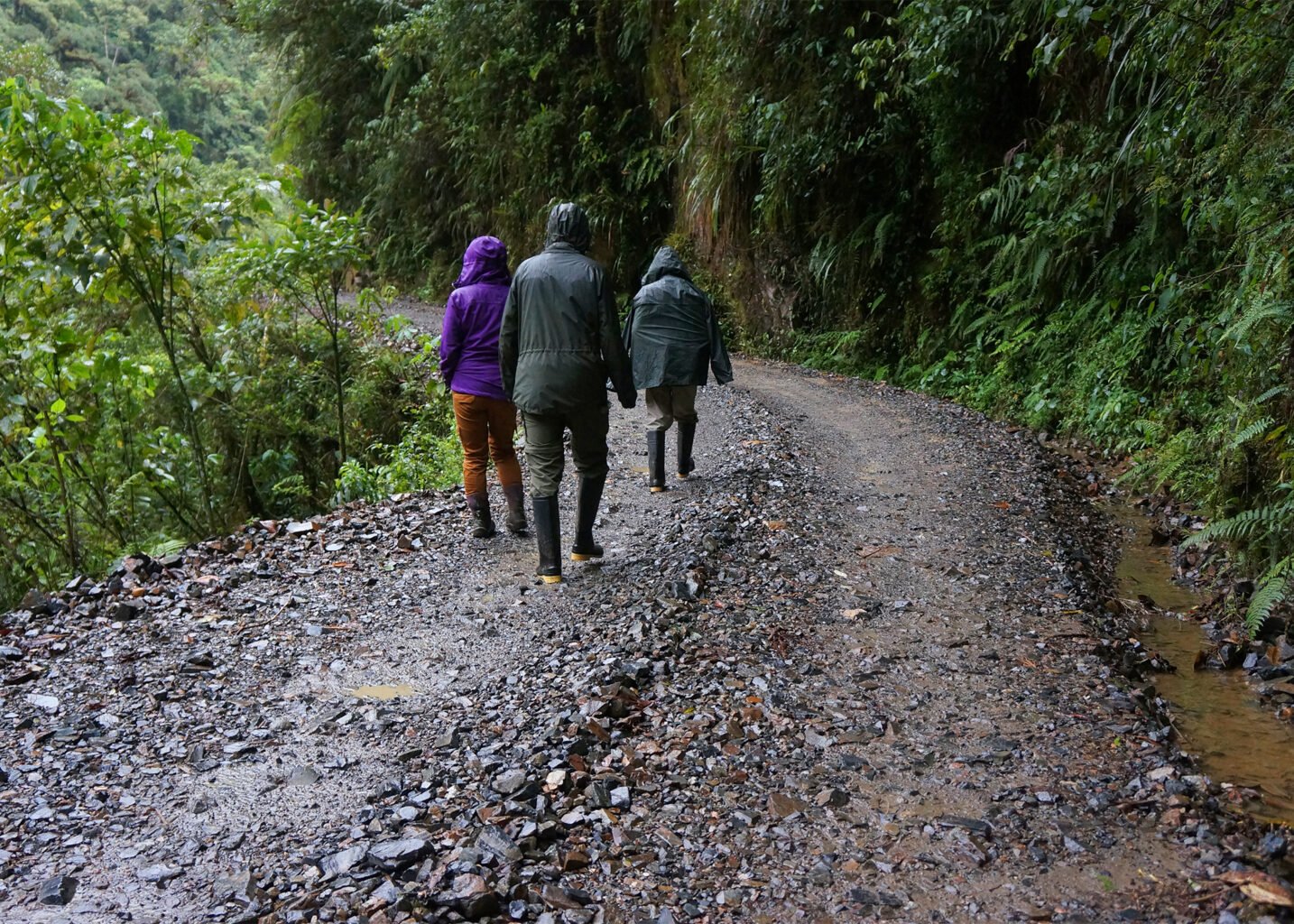
Satu outlined the new plan – some motorbikes were on their way down from Wayqecha, and a crew of locals would pick up all our gear from the van, carry it over the landslide, load it onto the motorbikes and take it up to the station for us. On our part, all we had to do was cross the landslide and walk up to Wayqecha. This was our only option, and while I was super appreciative of the local folks for doing this for us, there was no way I was going to leave my camera gear in the van and have someone lug it up the mountain on a motor bike. Not a chance! So, I took my camera rig, slung it over my shoulder and we headed off. Crossing the landslide wasn’t such a big deal to be honest, there were lots of people to help and the footing was not too bad. Once on the other side all we could do was work our way up Manu Rd and maybe do a bit of birding since the rain had stopped for a bit. After about an hour of slogging up the road, we decided to take a break (it’s hard work lugging heavy gear up a steep gravel road at high altitude).
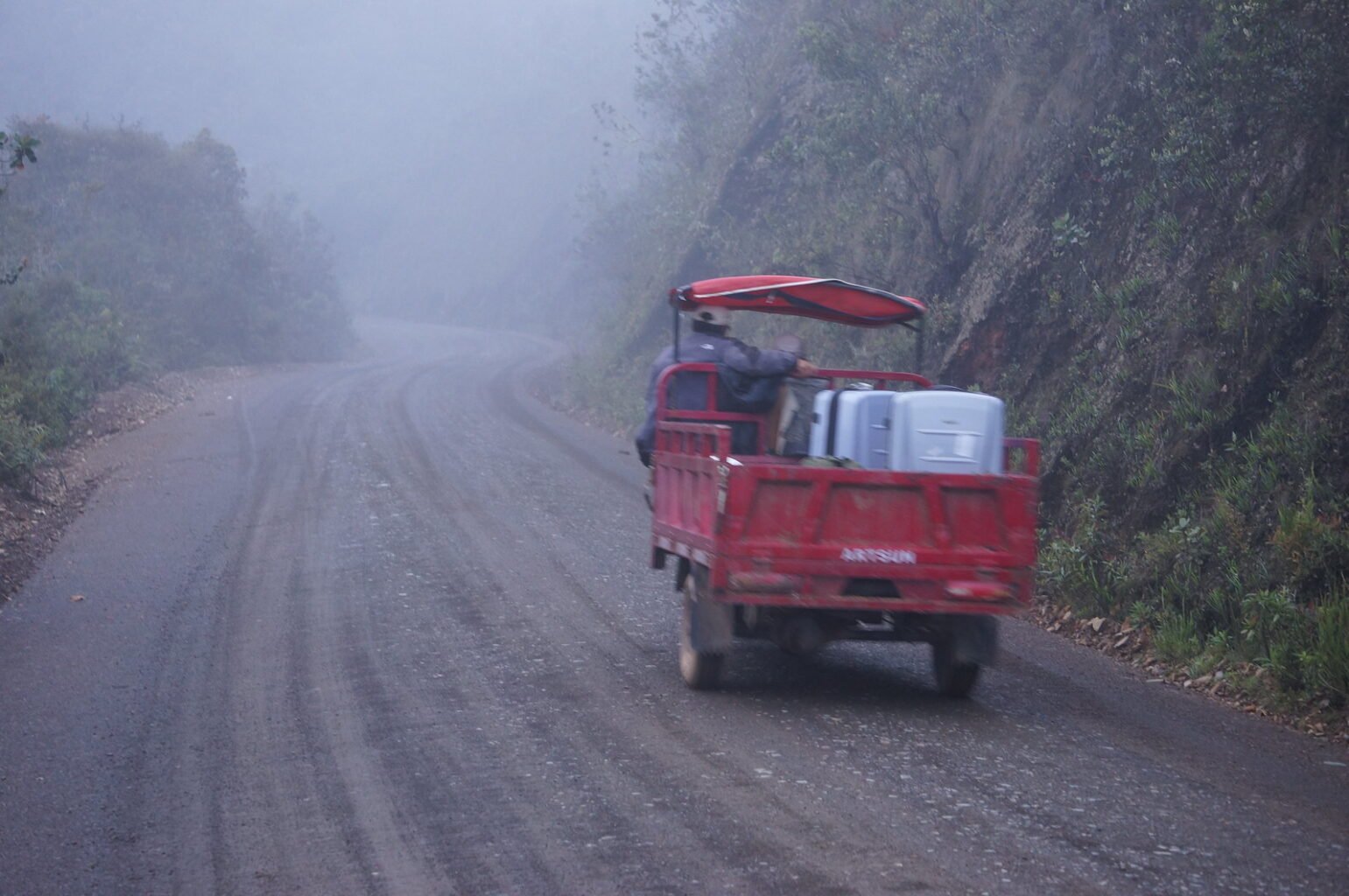
As we looked back down the road it was amazing to see so many people working as a coordinated unit, moving people and bags across the landslide and then watching all these motorbikes shuttling our stuff up the mountain. As we were admiring the scene Satu shouted to us – a flock of birds just flew into the bushes about 10 yards from us. Hooded mountain-tanagers! Oooft what an impressive bird. These are the largest mountain-tanagers and they are stunning, and this was a much better view than we’d had in Ecuador! Luckily, I had my camera and tripod set up right there on the road and for the next couple of minutes I took as many shots as I could get of these handsome birds. I was up against the odds – my lens had been fogging up, it was getting dark and it was starting to rain again, and at the same time a couple of covered trikes appeared with our bags to pick us up and take us to Wayqecha. unfortunately the mountain-tanagers flew off as they arrived but I was sure that I got a handful of shots that were in focus. If those trikes had been 2 minutes earlier, we would have missed the mountain-tanagers!
Later that night, after getting reacquainted with our gear and in the comfort of the lodge, I checked my photos and I had finally taken a decent set of photos of the hooded mountain-tanager! I was ecstatic and reflected that if it hadn’t been for the terrible weather and the landslide I wouldn’t have seen them at all. That was the only time we saw them on that trip, and it would be a few years since I saw them again on other trips to the Andes.
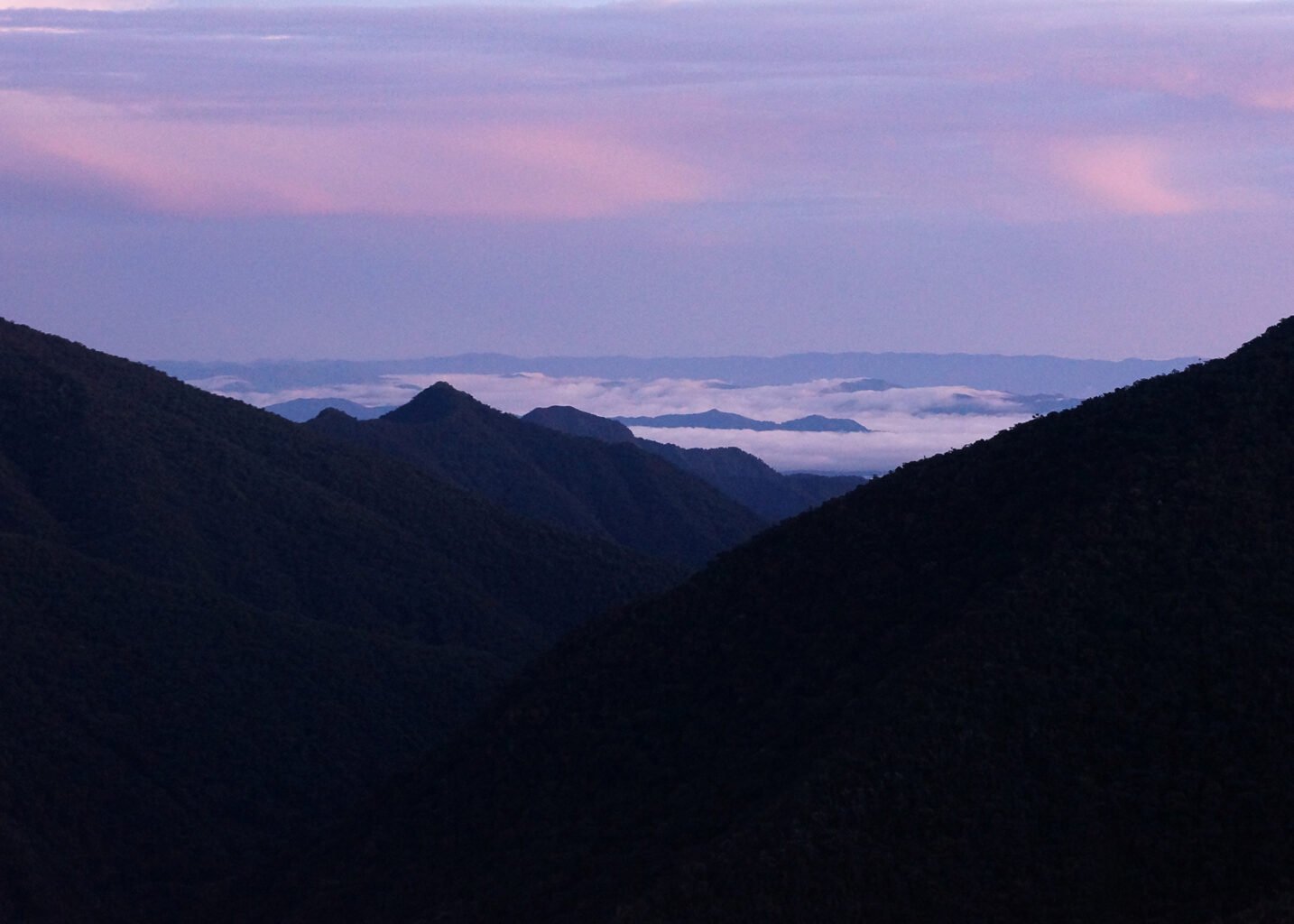
But what about the van? Going to sleep that night, we had no idea what was going to happen the next day, but we were so exhausted we slept through the night without worrying about it. The next morning, we woke up early as planned, headed down for breakfast, and our guide Satu had already been out and was coming back from somewhere. As we were getting breakfast he gave us the news – our plan was unchanged, we would take the van to Cusco then we head out to Machu Picchu as planned. We were pleasantly surprised, how on earth did they get the van over the landslide? The road hadn’t been fixed yet, but after we went to bed Satu jumped on a motorbike and drove at night back to Cusco (about 4h), picked up a new van and got it back to Wayqecha in time for us to get right back on track that morning.
We experienced a lot on that trip, and we found an amazing guide and friend in Satu. In the end this ended up being one of our more memorable trips, and despite everything we still saw 349 species, had an amazing adventure and picked up a new friend for life. It’s absolutely true that sometimes the best opportunities aren’t planned and come from the least expected and often unwanted situations. Every time I look at a photo of a hooded mountain-tanager I am reminded that sometimes it’s just better to go where the rain takes you!